Anuncios
Bankrate finds nearly a quarter of Americans have no backup cash, which often pushes them toward credit or loans when a surprise happens.
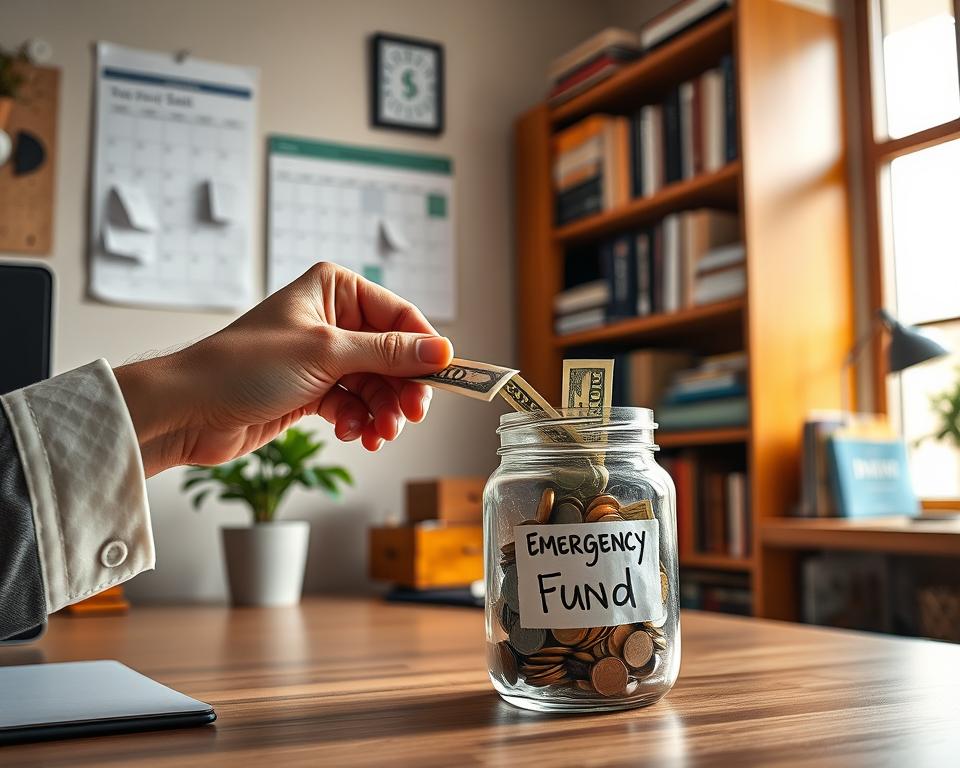
The opening frames emergency savings as a core part of stability, not a someday extra. It explains that an fondo de emergencia means money set aside in a separate cuenta for urgent, high-priority expenses, not routine bills.
The text casts the fund as a financial safety net that protects daily life from turning into long-term setbacks when a car breaks, someone gets sick, or income drops. It notes that time adds cost: waiting often raises bills and stress.
Readers will get a practical roadmap: set a realistic goal, build funds on any budget, automate deposits, and keep cash accessible. The guide also previews the clean split between emergency and rainy-day buckets so one pile does not drain another.
What emergency savings really protects and why it matters today
A small stash of cash can keep a sudden bill from turning into a long-term problem. It acts as a simple safety net that preserves plans and options when life shifts unexpectedly.
How unexpected expenses can derail a budget and long-term goals
Car repairs, a surprise medical bill, or a burst pipe can eat into funds meant for other priorities. One hit can push retirement contributions, home down payments, or debt payoff months farther away.
Why a cash safety net can reduce stress and protect peace of mind
Keeping money separate in a dedicated account helps people avoid panic borrowing. That separation stops a one-week problem from growing into months of interest and missed opportunities.
- Housing continuity: rent or mortgage stays current.
- Basic bills: utilities and transport remain funded.
- No panic borrowing: avoids high-rate credit and long repayment.
What the data says: many Americans still have no emergency savings
Bankrate reports 24% of Americans have no emergency savings, and 25% would rely on a credit card for a $1,000 unexpected expense. With rates above 20% on many cards, borrowing can add serious cost and stress.
The first step is clear: give this money a distinct job in a separate fund and fund it steadily. That simple move protects choices and reduces strain when emergencies arrive.
Why Emergency Savings Is More Than Just “Nice to Have”
A ready fund turns an urgent payment into a one-time event instead of a long repayment plan. Using credit or loans can double the price of a small problem once interest is added. Bankrate notes 25% of Americans would charge a $1,000 shock and likely carry the balance. With many card rates over 20%, that balance grows fast.
The high cost of “figure it out later”
Credit and high-rate loans make short-term fixes costly. A $1,000 expense can become months of payments and mounting interest. That process increases debt and limits future choices.
How a funded account supports security
An emergency fund helps when job loss, medical bills, or a car breakdown hits. Having funds on hand keeps bills current, avoids late fees, and protects credit scores.
- Protects cash flow: pays essential expenses without borrowing.
- Stops debt spirals: avoids rolling balances and added interest.
- Preserves earning ability: fixes a car so commuting and work continue.
Elección matters: a funded account lets people respond quickly and avoid unfavorable loan terms. For tips on building that initial buffer, see this guide on how to build an emergency fund and why it matters: build an emergency fund.
Emergency fund vs. rainy-day fund: building the right safety net
A clear split between small buffers and large reserves helps people protect long-term plans while handling everyday shocks.
Major backup for big shocks
Fondo de emergencia means money set aside for events that threaten financial stability—job loss, a serious medical episode, or replacing a vehicle. Avantis Investors recommends building this fund to cover about three to six months of basic living costs.
Everyday buffer for small surprises
El rainy-day fund handles common life hiccups: a broken washer, small medical bills, or school fees. Aim for roughly $1,000–$2,000 so minor issues don’t force use of the larger reserve.
How the two-fund approach protects progress
Keeping separate accounts and labels makes decisions simple. Small repairs draw from the rainy-day pile, while true emergencies pull from the larger account.
- Protects long-term goals: stops small costs from draining deep backup.
- Reduces stress: clears the choice about which funds to use.
- Builds habit: consistent deposits grow both cash cushions over months.
Next, the guide will show how to calculate a realistic baseline for those months instead of guessing.
How much to save: calculating essential expenses and a realistic goal
Start by counting only essentials—this makes a target feel real and reachable. Use a simple list of monthly necessities and leave out discretionary spending when you total the base number.
Use a “survival number” based on necessities
Survival number means housing, utilities, insurance, minimum debt, groceries, and transportation. Add those lines and call the result your monthly essential expenses.
Choose a target that fits life stage and income
Multiply the survival number by the months of coverage needed. Single-income households, commission pay, or medical risks often need more months. Dual stable incomes may target fewer months at first.
Plan for longer job searches and realistic timeframes
Average unemployment since 2000 runs about 5.5 months, with peaks near 9 months during big downturns. That data shows three months can be a starter goal, not always the finish line.
- Starter ladder: save a small cushion, then build toward full months.
- Tie the goal to real monthly expenses, not vague rules of thumb.
- Keep the account separate so funds stay available when they matter most.
How to start building an emergency fund on any budget
A simple starter goal makes saving feel possible, even with tight paychecks.
Dejar de lado a small amount first — Peoples Bank of Alabama suggests $500–$1,000 for individuals and $1,000–$2,500 for families. That starter cushion covers common shocks like a car repair or a small medical bill.
Set a starter amount and start small
They should pick a clear, reachable target and start small. Hitting one short goal builds confidence and momentum.
Create a simple budget without breaking everyday life
Trim modest, repeatable costs rather than attempting drastic cuts. Move that small difference straight into a separate savings account each payday.
Try a short savings sprint
Bankrate recommends a 4–6 week savings sprint: pause nonessentials and aim for a $500 starter goal. A focused push can jump-start reserves in a short time.
Use windfalls to accelerate progress
Direct tax refunds, bonuses, or gifts into the same account. Those windfalls speed a fund’s growth without squeezing monthly income.
“Starting small beats waiting for a perfect month.”
- Dejar de lado the starter amount.
- Automate transfers to the dedicated savings account.
- Repeat short sprints and add windfalls until the next milestone.
Keeping the fund in its own account protects progress and makes it easy to track. This way, people can get started now and build a stronger buffer over time.
Make saving automatic: transfers, accounts, and tools that do the work
When contributions run on autopilot, a fund grows without daily effort or willpower tests. Automation turns the plan into a system so people don’t need to decide each payday.
Set up automatic transfers or split direct deposit
Transferencias automáticas move a set amount straight into a separate savings account each pay period. Peoples Bank of Alabama shows small weekly amounts add up: $10/week = $520, $25/week = $1,300, $50/week = $2,600 per year.
Track progress monthly and protect the goal
Simple monthly tracking keeps motivation high. Use a dashboard or calendar check-ins to watch how funds grow toward the goal.
Keep savings apart from spending
Store emergency savings at a different bank or a separate account to reduce temptation. Bankrate recommends this for added security and lower impulse withdrawals.
- Pay yourself first: schedule transfers before bills.
- Use tools: automations, apps, and monthly trackers.
- Protect progress: separate accounts keep funds intact.
Where to keep emergency savings: access, safety, and earning interest
Choosing where to hold a fund means balancing quick access with basic protection and a decent yield.
High-yield savings accounts offer higher interest while keeping cash liquid. They beat traditional savings accounts for growth and still allow easy transfers when bills or urgent expenses arrive.
High-yield versus traditional accounts
A HYSA gives better returns and the same deposit protection as a regular savings account at many banks. That makes it a top choice when someone wants both access and modest interest.
Money market accounts and funds
Money market accounts are deposit products often insured by FDIC or NCUA up to $250,000. A money market fund, however, is a brokerage product. It is not deposit insurance; SIPC can protect brokerage holdings, which differs from bank coverage.
CDs as a partial strategy
Certificates of deposit can boost yield but impose early-withdrawal penalties. Use CDs for a slice of the fund if liquidity needs are low and timelines are clear.
Know the guardrails
- Deposit insurance: FDIC/NCUA protects many accounts up to $250,000.
- Brokerage protections: SIPC covers certain brokerage assets up to $500,000, not the same as deposit insurance.
- Retirement accounts: Avoid relying on retirement funds for sudden cash; taxes and penalties can erode long-term retirement progress.
The best option balances safety, speed, and separation from everyday spending so the fund stays available when needed.
Conclusión
A practical plan keeps an unexpected cost from changing someone’s long-term future. , It urges a clear path: start with a rainy-day buffer, then grow an emergency fund sized to essential monthly expenses.
Use true emergencies only. Avoid credit and high-rate loans when possible; interest can make a small bill far costlier. Pick sensible options and keep a labeled net of savings separate so choices stay simple.
Don’t tap retirement first—withdrawals can trigger tax penalties and lost growth. Replenish funds after any use, direct tax refunds or windfalls toward the account, set an automatic transfer, and get started this week for more peace mind.